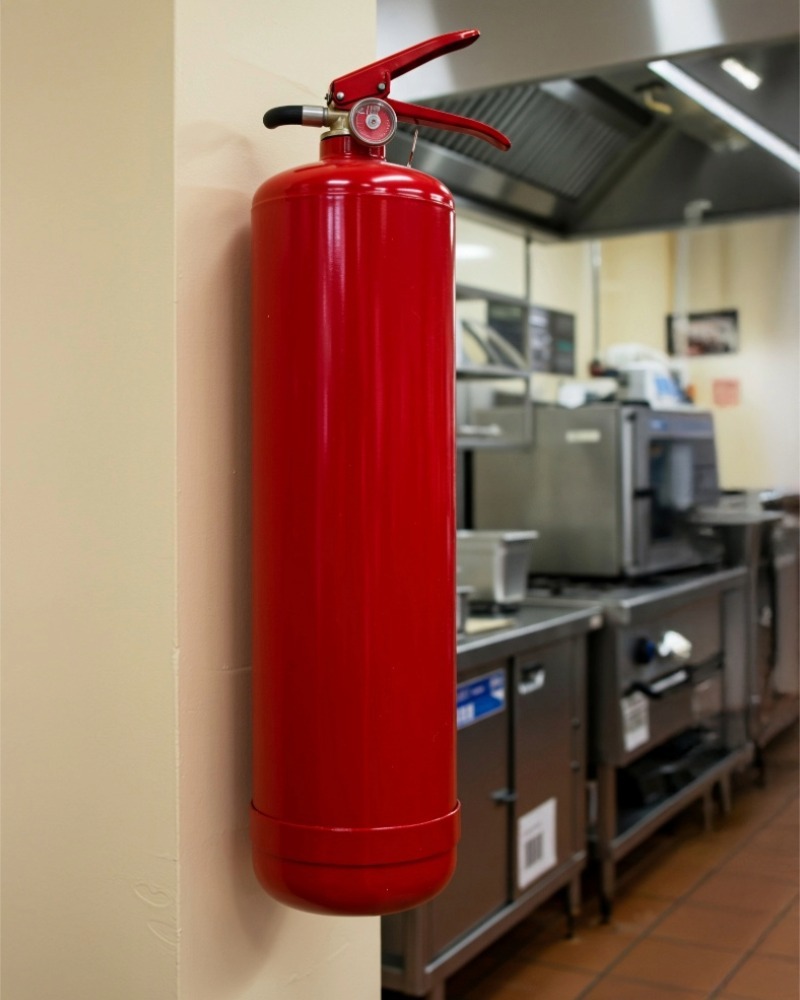
Your fire suppression system is the “insurance policy” you hope never to use. However, a “Clean Slate” start to 2026 requires more than a quick glance at the pressure gauge or a dusty tag. These systems are complex mechanical networks, and like any mechanical system, they are subject to wear, corrosion, and human error. If a fire breaks out at 8:00 PM on a Friday, “hope” is not a strategy.
This year, ensure your suppression system meets these critical 2026 benchmarks for reliability:
- Precision Nozzle Alignment: Kitchens are dynamic environments. If you swapped out a charbroiler for a flat top or moved a fryer even six inches over the holidays, your suppression nozzles may no longer be aimed at the “hazard zone.” We perform a “dry run” to ensure that the chemical discharge will land exactly where the flames start, not on the floor next to them.
- Fusible Link Replacement (The Critical Trigger): These small metal links are designed to melt at a specific temperature, triggering the system. In a kitchen, they constantly collect “fly-away” grease. If they become coated, their melting point changes, or they might fail to snap entirely. We replace these semi-annually as part of our core service to ensure the “brain” of your system is always alert.
- The Interlock Test: When your system activates, two things must happen instantly: the chemical must spray, and the fuel source (gas or electric) must shut off. If the gas keeps flowing, the fire can reignite even after the chemical is spent. 2026 inspections are placing higher scrutiny on the gas shut-off valves. We test this interconnection as part of our fire suppression service to ensure that when the system says “stop,” the fuel actually stops.
The consequences of failure in any of these three areas are immediate and severe. A system that doesn’t activate costs you more than repair bills—it costs you operating days while insurance investigators comb through charred equipment. A system that activates but doesn’t cut the fuel supply can turn a contained incident into a total loss. And in the worst cases, delayed or failed activation puts your staff at risk during your busiest hours. The 2026 regulatory environment reflects this reality: inspectors are no longer satisfied with “it passed last time.” They want documented proof that each component works as designed, right now.
These three areas drive most of the questions we hear from kitchen managers and owners. Here are the answers to the most common concerns:
Common Fire Suppression Questions
Why won’t my fire suppression system trigger when there’s smoke?
Your system is designed to activate from heat, not smoke. If fusible links are coated with grease buildup, they may fail to melt at the correct temperature, or not trigger at all.
Can I move kitchen equipment without updating my suppression system?
No. Even moving a fryer six inches can put it outside the nozzle’s coverage zone. Any equipment change requires nozzle realignment and possibly additional coverage.
How often does my fire suppression system need inspection?
NFPA 17A requires professional inspection and testing every six months. After any discharge, your system must be reset and recharged before you can reopen.
My suppression system has never been used. Does it still need maintenance?
Yes. Grease accumulation on fusible links, pressure loss in agent cylinders, and wear on interlocks all happen whether the system discharges or not. Dormant systems fail when you need them most.
What happens if the gas doesn’t shut off when the system activates?
The fire will reignite after the chemical is spent. The 2026 interlock test specifically checks that fuel sources cut off instantly. This is now under higher inspector scrutiny.
At Bowmar Industrial Services, we don’t just “tag and dash.” We treat your suppression system as a living part of your kitchen, ensuring it pulses with precision when it matters most. For a complete view of your 2026 fire safety requirements, see our Commercial Kitchen Checklist. Ready to schedule your fire suppression inspection? Contact us today.